WHEN I FINISH A MEMOIR WHERE DOES IT GO//
WHERE do we go to receive our histories?
Part of my personal historical account is the list titled ‘Books read/finished 2023 :)’ that I keep as a google doc. Projecting past 2023, this list still runs in 2026 and until my ego dies or the chrome engine busts, I will probably keep it going. Each year I have started a new page of the document. And referring back to it to remember what it is I consume and reflecting on why – I came across a pattern.
Since I started recording what I read and how in 2023 (is it an audiobook or am I reading? Is it from the library or did I actually buy this?) – I have read fourteen memoirs.
With the exception of one non fiction book, they make up the only non fiction I read.
Now of course there are the newspaper articles, the magazines unaccounted for in this four year old document. I do consume writing which can be accounted for and referenced beyond the individual narrator. But the list I care about is the books I read and finish. Much like the memoir, I am pulling out what I like to know about myself – and like the memoir reader, you have to trust that I am telling the truth.
2023:
Notes to Self by Emilie Pine.
Fierce Appetites by Elizabeth Boyle.
All the Young Men by Ruth Coker-Burke.
2024:
Why Be Happy When You Could Be Normal by Jeanette Winterson.
Unfollow by Megan Phelps-Roper.
I Survived Capitalism and All I got was this Lousy T-Shirt by Madeline Pendleton.
A Place of Our Own: Six Spaces that Shaped Queer Women’s Culture by June Thomas.
2025:
The House of My Mother by Shari Franke.
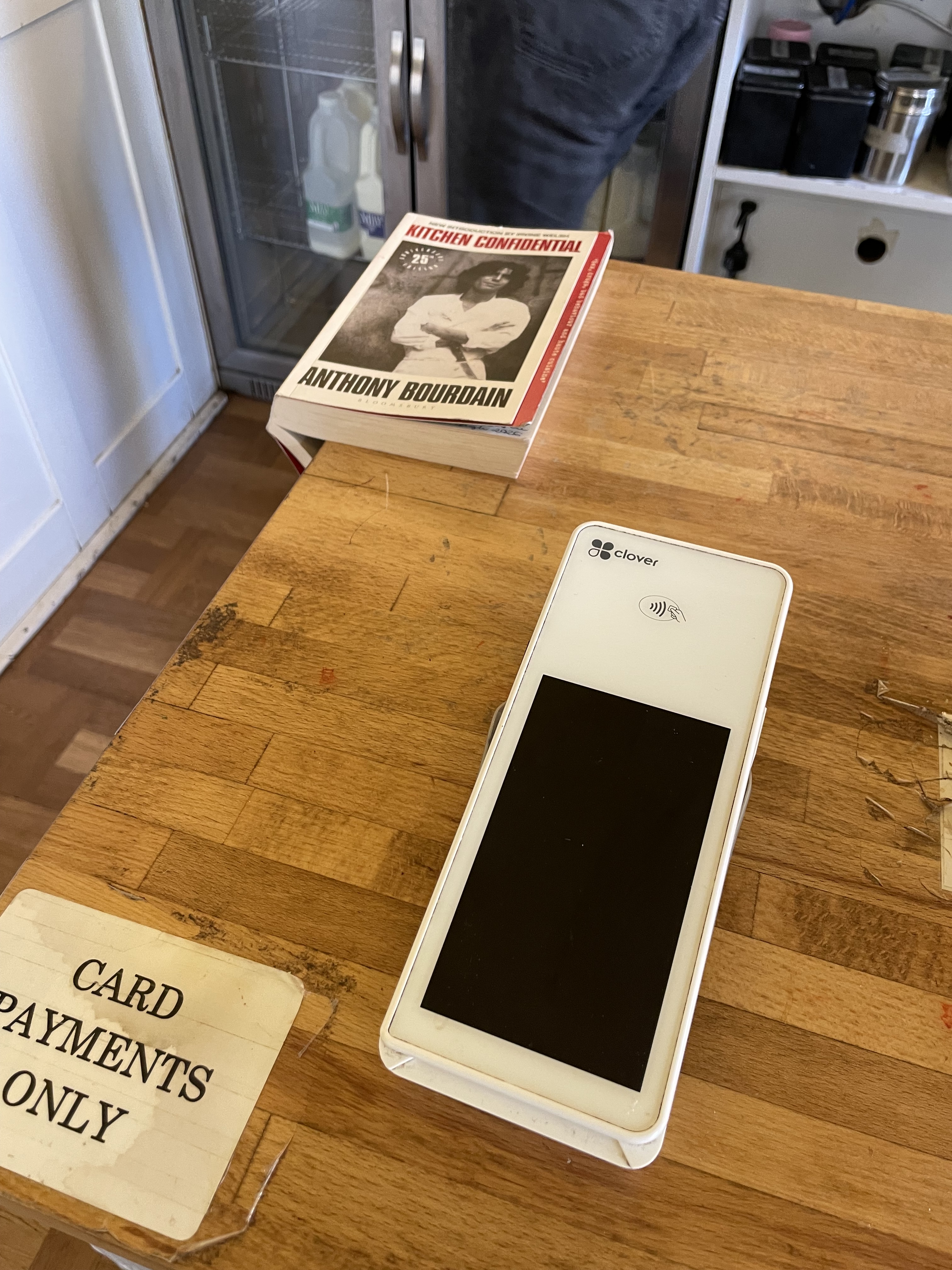
Kitchen Confidential by Anthony Bourdain.
Class by Stephanie Land.
Rememberings by Sinead O’Connor.
Consent by Jill Ciment.
Semi Well Adjusted Despite Literally Everything by Alyson Stoner.
Down the Drain by Julia Fox.
2026:
All the Way to the River by Elizabeth Gilbert.
THE Cambridge online dictionary defines memoirs as ‘a book or other piece of writing based on the writer’s personal knowledge of famous people, places or events.’ And the online National Centre for Writing resource considers memoirs ‘a powerful form of personal storytelling that blends intimate reflection with engaging narrative.’
The former definition seems to me to ask a lot of memoirists. It compelled me to ask the questions: Do you have to be famous already to write a memoir> Do you need to know famous people to write a decent memoir> Do you have to talk about events> What would even be considered an event>>> And consulting my list of memoirs, I did not find this set of criteria to be true.
Taking the second definition feels more true to my experience of memoirs and knowledge gleaned from reading them. This ‘personal storytelling’ I consider to be a more realistic way of defining a memoir. An exercise of intimate narration based on the primary eyewitness experience, memoirs answer questions and bring up questions in me that I like thinking about:
What does it feel like to live differently to me?
When do people gain clarity about their experiences?
How important is it to be truthful about our lives>
And if I were defining memoirs in my own language I would say they are ‘my favourite place to receive history.’
THE first sophisticated question I remember learning to ask is how someone’s day was.
Now from there, there are a lot of options, and as I was in primary school when I learned this was a good question to ask, a lot of people I asked were also kids in school.
So a place I learned to take this was> do you like school? And if so> what is your favourite subject?
This line of questioning never leaves and as I started studying history with more aplomb others ask> what is your favourite part> your favourite period.
And unfortunately I do not have a great answer. The most truthful answer is that I only have a favourite form. I love emotional histories. Including but not limited to: What people thought about the people around them, the circumstances they lived in and how they dealt with it and most important of all> what did they feel the entire time they were experiencing everything. Memoirs get straight to the root of what I want to know, and like a desire path in my mind, they satiate a need to know more about the personal human condition.
Using again the National Centre for Writing, they state that ‘Memoirs often explore universal themes like love, loss, identity, and resilience, connecting the author’s unique journey with the broader human experience.’ The connection with the broader human experience is key and why I think memoirs last in my (people’s) memories. Why I think the likes of ‘Eat Pray Love’ by Elizabeth Gilbert, and ‘Educated’ by Tara Westover, ‘Wild’ by Cheryl Strayed and ‘The Glass House’ by Jeannette Walls are so enduringly popular.
They speak to one of the reasons I study history which is to get to know there are people living like I do or how I want to live; Feeling how I do or warning me about how I could one day feel.
JEANETTE Winterson’s memoir informed me people can be filled with desire so strong it makes their eyes water; Ruth Coker-Burk that people have empathy so cultivated it keeps them awake; Jill Ciment that people can reinterpret their lives over and over again.
Through emotional histories, authors of memoirs have taught me about their experience of the world at the time.
Madeline Pendleton’s memoir centred around the financial background they grew up in and how this fundamentally informed the shape of their life and the decisions they would make and were not able to make, growing into adulthood. Speaking about the global 2008 recession and the impact this had on the apparel industry in California, Pendleton’s account provides a perspective for the experiences of many working in apparel at the time.
June Thomas’ genre bending work defines six spaces for queer women they both were a part of and/or researched from the 1970s to present day at publication (2024). Focusing on these spaces in the UK and USA alone, Thomas brings to life the experiences of women who frequented the bars, bookshops and holiday spots established by and for queer women. This book illuminates what it felt like to have these spaces to go to, and how those who went developed alongside them.
I wonder how other people would talk about these books, what they gained from reading them.
How would others contextualise their lives?
Can you see yourself in other people?
Did I connect with these books because I had somewhere to go in them>
MAYCI Neeley from the Hulu show The Secret Lives of Mormon Wives, released her memoir ‘Told You So’ in October 2025. And based solely on my memory of watching the show, her reason for writing her experience came from a desire to reach out from the page and make other people in similar situations feel less alone.
This made me think about Elizabeth Boyle’s more ancient approach, referring to Irish folklore before introducing new times in her life. And I wondered if Boyle felt less alone having those stories to refer back to. And remembering this led me to thinking about a memoir by Sheila Heti I have yet to read but a concept I think about often.
Claire Dederer wrote a review for The Guardian of ‘Alphabetical Diaries’ by Sheila Heti. Dederer achieved writing about Heti’s memoir which is based on her own personal diaries (classic memoir source material) and compiled sentences alphabetically i.e., sentences starting with A, with B etc. Dederer described it as indeed boring but ‘a surprisingly powerful weapon against loneliness, at least for this reader.’
These three women engaging with memoir materials both as authors and consumers describe the comfort people can take from memoirs. Neeley articulates wanting people to have somewhere to go, and Boyle and Dederer found somewhere.
DIFFERENT to the likes of any biography, census, or curated objects in a museum – the memoir stays singular to me in inspiring my desire to learn more about history.
Rejoicing in receiving my favourite histories in such a biased format compelled me to consider the original question> where do we go to receive our histories> what does this say about us?
The thoughts I have so far are that enjoying emotional history leaves me vulnerable to the feelings of those recording these emotions> And that understanding emotional histories finds me deeply comforted, as the more I engage with written, spoken and unspoken records, the more I sense I have never had an unfelt feeling.
Not once.
Thank god.
What does your way of engaging with history say about you>
The resources I used:
My memory - the primary source 😉
National Centre for Writing (2026) https://nationalcentreforwriting.org.uk/writing-hub/crafting-your-memoir-a-guide-to-storytelling-reflection-and-connection/
Cambridge Online Dictionary (2026) https://dictionary.cambridge.org/dictionary/english/memoir#google_vignette
Claire Dederer for The Guardian (10 Feb 2024) https://www.theguardian.com/books/2024/feb/10/alphabetical-diaries-by-sheila-heti-review-easy-as-abc

